
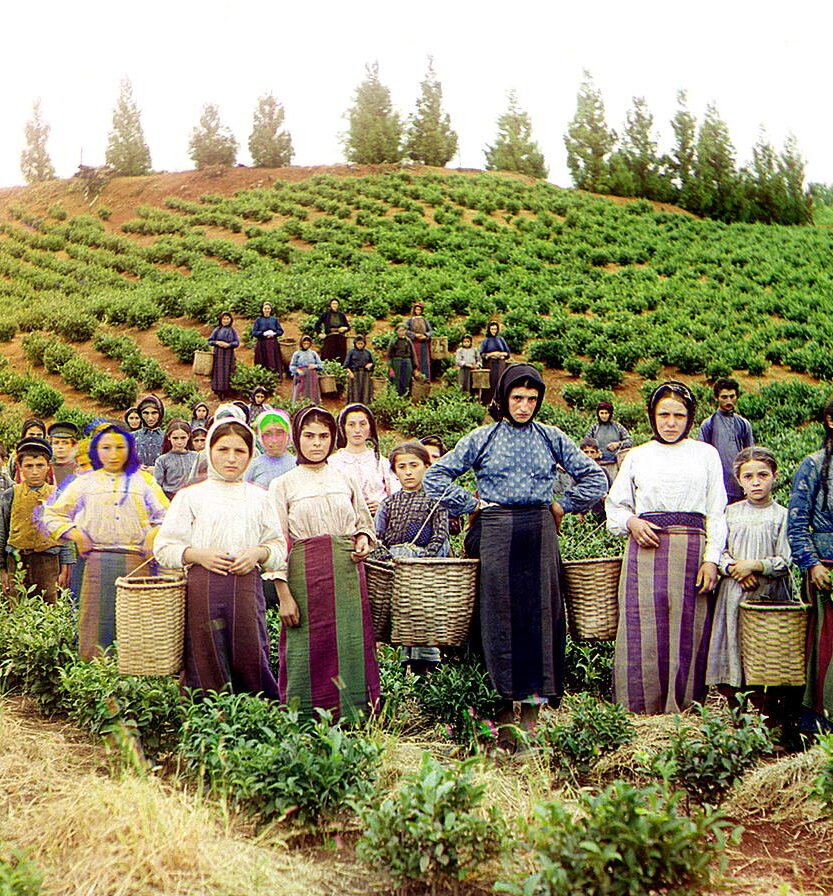
The rise and disappearance of one of the world’s largest tea industries.
For many, it might seem strange, but within living memory Georgia was one of the world’s top five tea producers. It all began in 1809, while organized tea production in Georgia began in 1848. The history is full of turns. Since then, tea has become intrinsic to the culture of western Georgia, where, from the road, a visitor can see forests of tea, abandoned but slowly being reclaimed after decades of neglect.
The First Tea Bushes
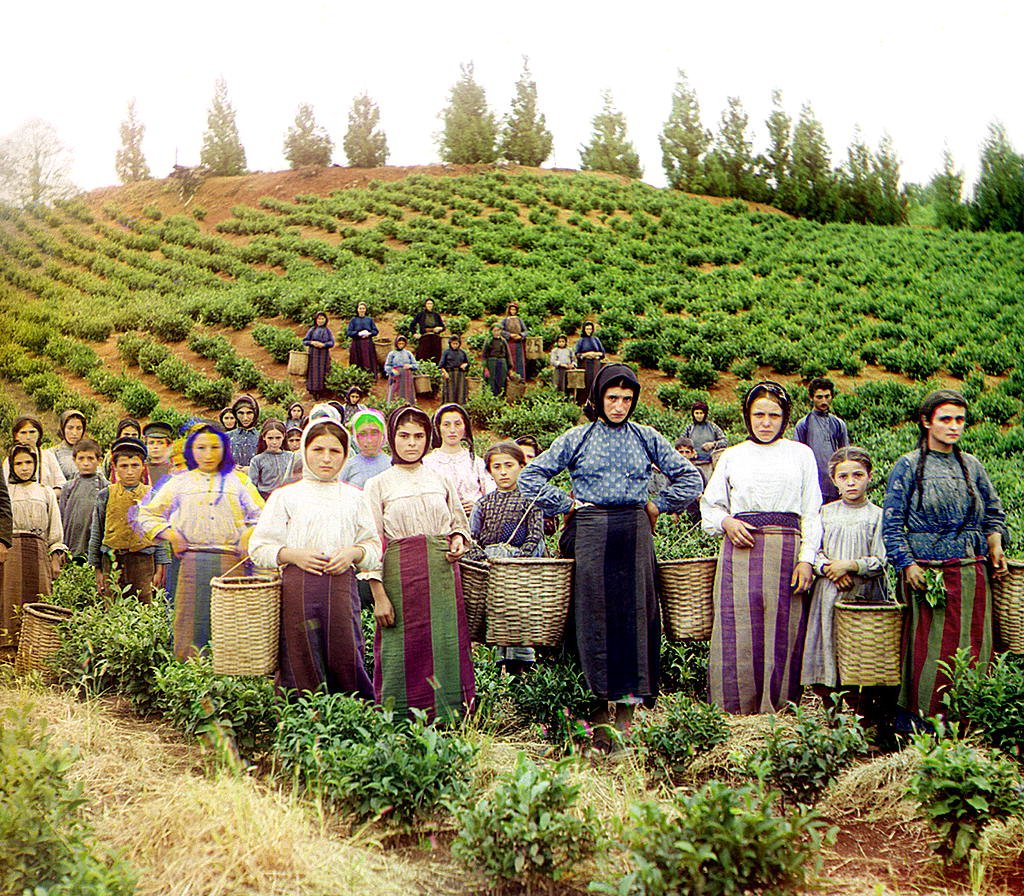
The first tea bushes did not immediately create an industry. According to one account, Mamia V Gurieli, the last prince of Guria, planted tea in his garden in the early 1800s. For decades, it remained a curiosity grown in private gardens and experimental plots. More serious cultivation began in the 1840s, when tea plants appeared in Ozurgeti, on the Dadiani estates, and in Sokhumi. Western Georgia’s humid climate suited the plant, but turning its leaves into good tea required knowledge that Georgia did not yet have.
That knowledge came from China. In 1893, thirteen Chinese tea specialists arrived in Chakvi at the invitation of plantation owner Konstantin Popov. Among them was Lao Jin Jao, who would become central to the history of Georgian tea. He established plantations, introduced methods of cultivation and processing, and trained local workers. Today, a museum in Batumi preserves the straw hat he wore in the fields, a small personal object from the years when an experiment was beginning to turn into an industry.
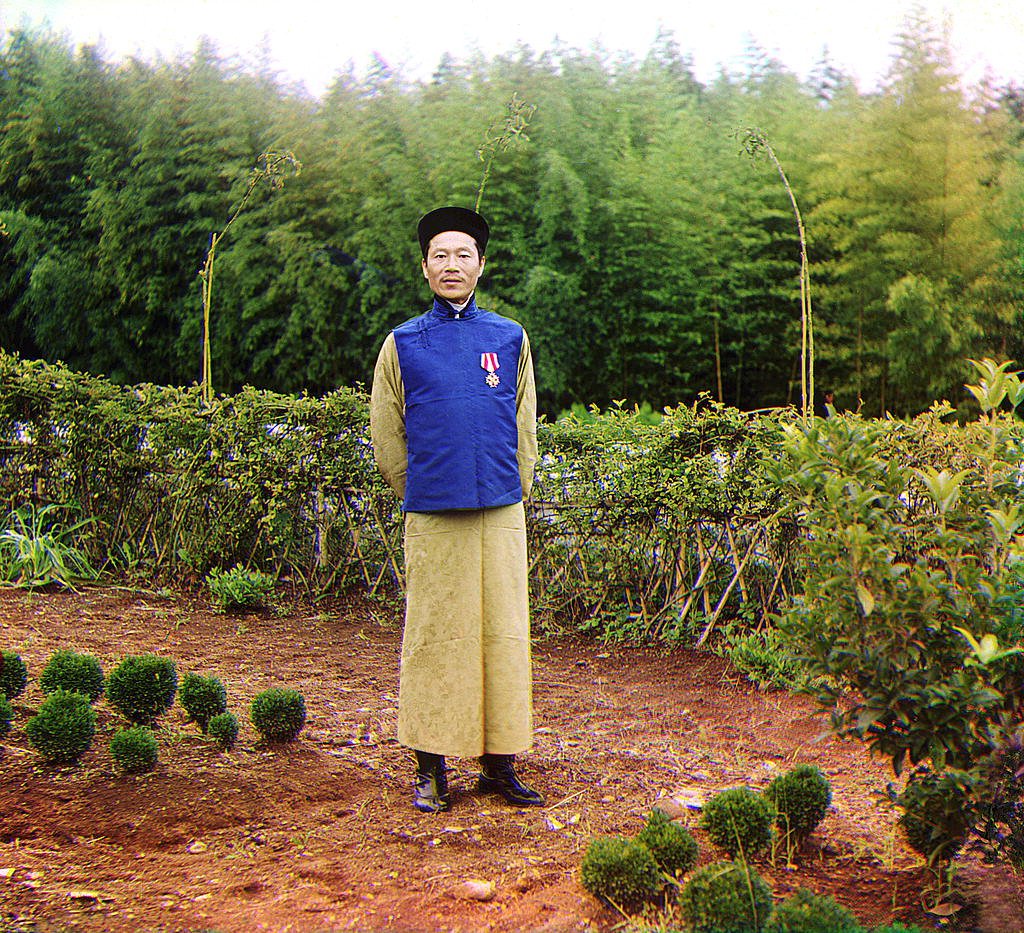
In 1900, tea grown under Lao Jin Jao’s direction received a gold medal at the Paris Exposition. The award placed Georgian tea beside products from countries with much older tea traditions and proved that the plant could produce leaves of distinction on the Black Sea coast. By the beginning of the 20th century, plantations and processing factories were appearing across western Georgia. What had begun in private gardens was becoming a recognizable Georgian industry.
Building the Soviet Tea Country
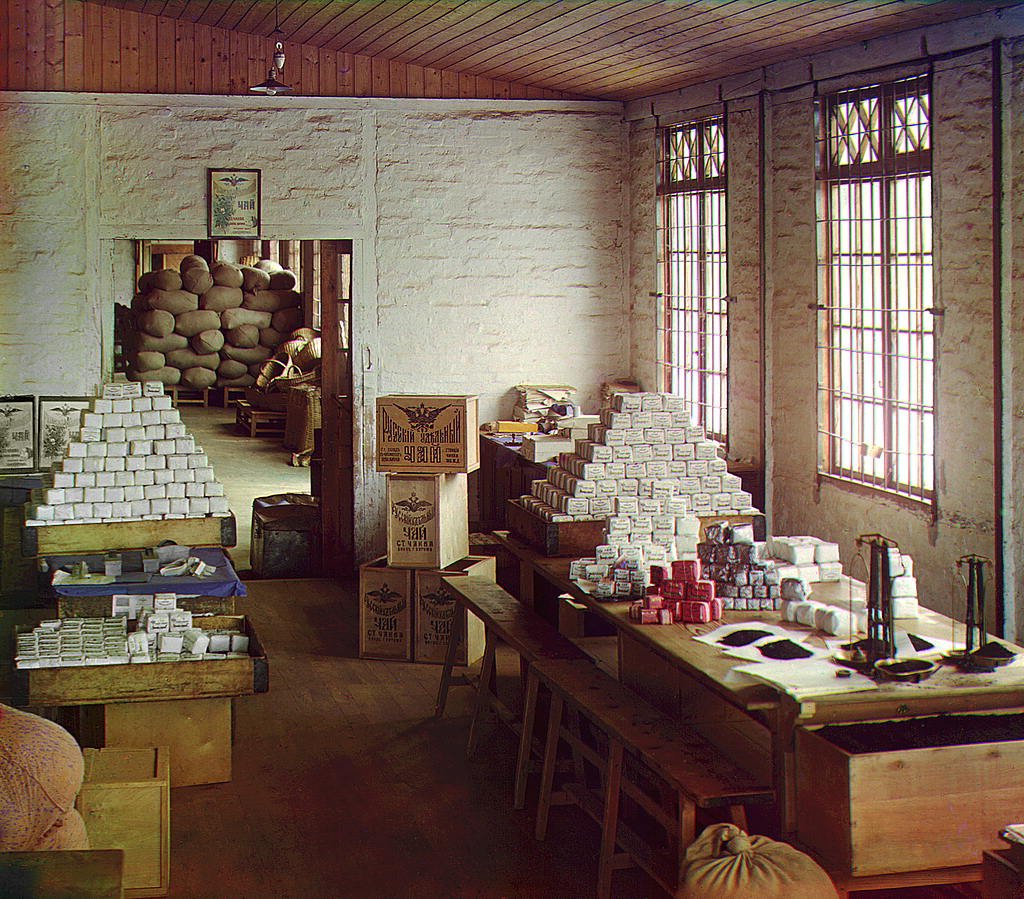
After the Soviet takeover of Georgia in 1921, tea became part of a centralized agricultural system. From the 1920s onward, Soviet planners expanded plantations across Guria, Adjara, Samegrelo, Imereti, and Abkhazia. They built factories, nurseries, and research institutions to turn western Georgia into the Soviet Union’s main source of tea. The industry grew at great speed, but local production now answered to state plans and quotas rather than the judgment of individual growers.
By the late Soviet period, tea cultivation had transformed western Georgia. Nearly 70,000 hectares were devoted to the crop, and about 180,000 people worked across its plantations, factories, and other stages of production. The recorded harvest reached its peak in 1985 at approximately 152,000 tons, placing Georgia among the world’s largest tea producers. In many western Georgian villages, tea shaped the working year and provided an income for entire families. Yet this immense quantity was hiding a time bomb: as production quotas continued to rise, the quality of Georgian tea was deteriorating.
The Time Bomb Behind Quantity
Good tea begins with careful picking. The youngest leaves and buds produce the finest results, but gathering them requires time and skilled hands. Georgian scientists and engineers tried to solve this problem by developing the world’s first tea harvesters for valley plantations. Their best-known machine, Sakartvelo, entered serial production in the early 1960s and became an important achievement of Georgian agricultural engineering. The invention itself was designed to ease exhausting manual labor. The problem came as production quotas continued to rise and machines were increasingly used to gather greater quantities of leaf. Older leaves, stems, and coarse material entered the harvest, making the finished product less consistent. Georgian tea remained abundant, but its reputation for quality continued to decline.
The Collapse
When the Soviet Union collapsed, Georgia’s tea industry collapsed with it. The system had been built to serve one protected market, and after 1991 that market disappeared almost overnight. Factories closed, machinery was sold or left to rust, and thousands of workers lost their livelihoods. Some families uprooted tea bushes to plant crops they could sell. Other plantations were abandoned and slowly grew into forests. An industry that had taken more than a century to build disappeared within a few years.
During the mid-1990s, foreign investors entered Georgia’s damaged tea industry. German companies bought several processing plants, and the Martin Bauer group became involved with Geoplant, hoping to use Georgia as a route back into the Russian market. Their investment brought a short period of recovery, but it could not rebuild the system that had supported Georgian tea. Political instability, high production costs, weak demand, and the loss of established markets continued to push the industry downward. Many factories and plantations remained abandoned despite the arrival of foreign capital.
By 2015, only about 11,000 hectares of Georgia’s former tea plantations remained, and merely 1,700 hectares were still in production. In 2020, the Food and Agriculture Organization reported that Georgia and Azerbaijan together were producing less than 2 percent of their output at the Soviet-era peak. Across western Georgia, the rest of the story remained visible in the land. Tea bushes once kept low for harvesting grew into tall, tangled trees. Factory buildings emptied, plantation roads disappeared, and fields that had supported entire villages became forests.
What Remains
In recent years, growers have begun clearing and restoring some of these abandoned plantations. A state rehabilitation program launched in 2016 has supported part of the work, while small producers have returned to hand picking and limited production. Their purpose is no longer to supply an empire with enormous quantities of inexpensive tea. They are trying to recover the quality that Georgian tea lost during the final decades of mass production. The work moves slowly because each plantation must be cleared, pruned, and tended for several years before it can produce a reliable harvest again.
Georgian tea belongs to more than one period of history. Its story includes Gurian gardeners, Chinese specialists, Georgian scientists, factory workers, and generations of women who picked leaves across western Georgia. It began long before the Soviet Union, and the Soviet state did not create it, although it expanded the industry to an enormous scale. Today, the old tea forests carry all these chapters at once: early ambition, industrial success, declining quality, economic collapse, and the first signs of return. The bushes survived every system built around them.

