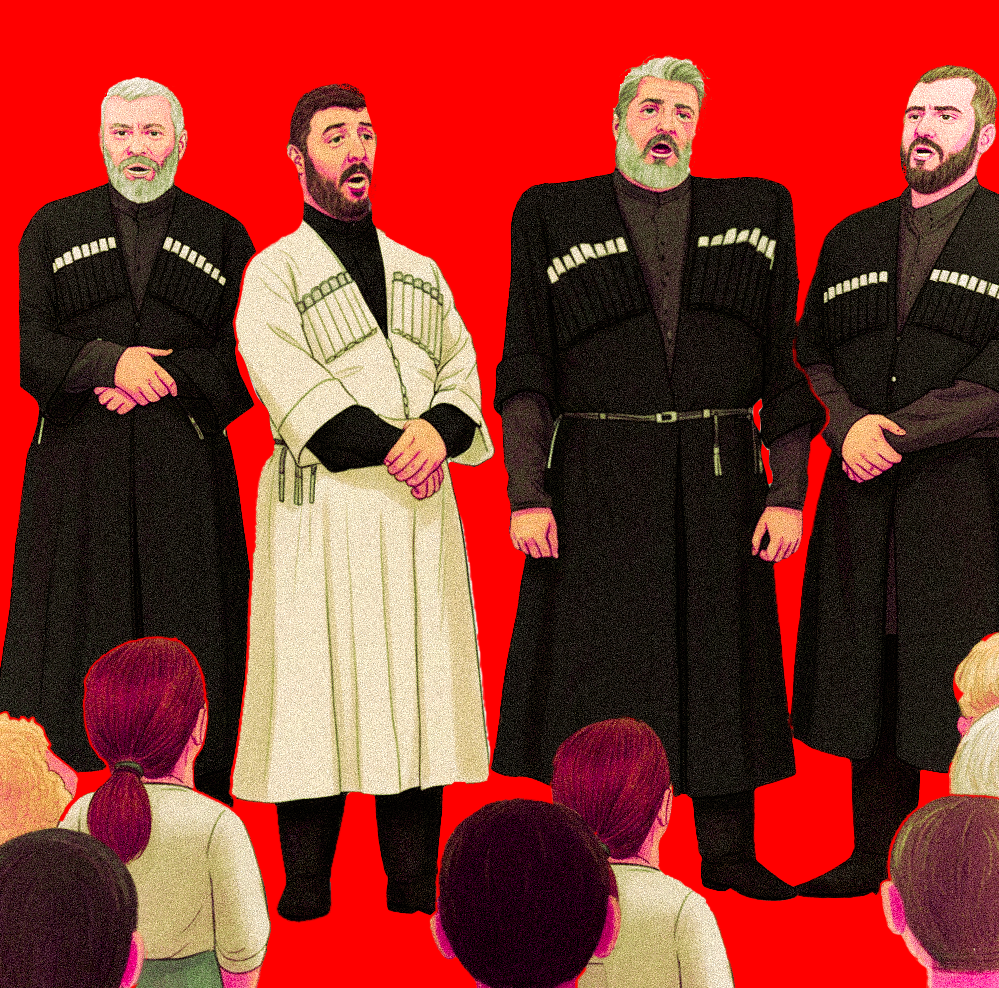
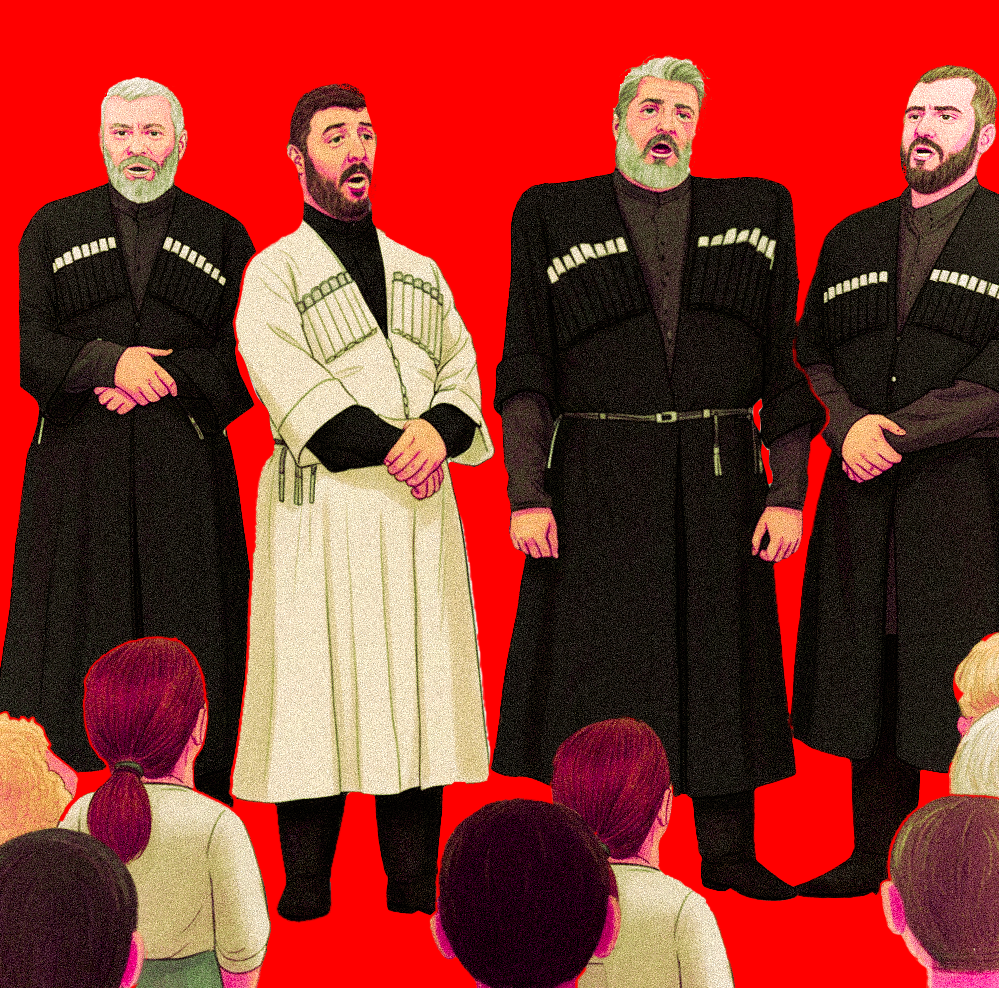
There are places where music is an art form—performed, applauded, archived. And then there are places where music is something closer to a shared instinct, a social bond, a way of staying human together. In Georgia, traditional polyphonic singing belongs to the second category.
Georgian polyphony is often introduced as a “unique musical phenomenon,” and that is true. But the deeper truth is simpler: this tradition matters because it has always been more than music. It is community, memory, discipline, emotion—carried not by institutions first, but by people.
In 2001, UNESCO recognized Georgian polyphonic singing as a masterpiece of oral and intangible heritage. That international recognition is important, but it does not explain why polyphony survives. Survival comes from kitchens and courtyards, village gatherings and family tables, rehearsals that feel like reunions, and voices that learn to listen before they learn to lead.
A Tradition Built for Togetherness
Polyphony is not merely “singing in harmony.” Georgian polyphony is structured around the idea that different voices can move independently while still forming a single whole. Sometimes the lines support each other, sometimes they challenge each other, and sometimes they seem to compete—until the moment they resolve.
That is why Georgian singing can feel so intense to first-time listeners: it does not aim to be delicate. It aims to be true. There is a raw confidence in it, as if the song is not asking permission to exist.
And perhaps that is why polyphony became so central to Georgian identity. When history is difficult, a culture often clings to what cannot be easily taken away. A song can be carried anywhere. A tradition can live inside a person.
Each Part of Georgia Has Its Own Unique Sound
One of the most remarkable aspects of Georgian polyphony is how deeply it changes from region to region. You don’t just hear “Georgia” in a single uniform style—you hear local identities, histories, and community aesthetics shaping the music.
Broadly, Georgian polyphony is often described through three main regional approaches:
- Complex, interwoven polyphony (strongly associated with Svaneti) where voices lock together densely, creating a sound that feels ancient and monumental.
- Polyphonic dialogue over a steady bass foundation (common in Eastern Georgia, including Kakheti) where the upper voices move like a conversation—grounded and clear.
- Contrast polyphony (especially in Western Georgia) often three-part and partly improvised, driven by bold vocal color, tension, and release.
This diversity is part of what makes Georgian polyphony so powerful: it preserves differences rather than smoothing them out. Each region carries its own musical “dialect,” and together they form a tradition that is rich, layered, and unmistakably alive.
Chakrulo, Krimanchuli, and the Sound of Identity
Some Georgian songs have traveled far beyond their original communities. “Chakrulo” is among the most widely recognized: a powerful, ceremonial polyphonic song often linked with public performance and national pride. Harmony Chronicles has already explored Chakrulo’s global journey—and it is worth reflecting on what that journey symbolizes.
When a song becomes famous, the risk is that it turns into a symbol rather than a living practice. The value of Chakrulo is not only that it represents Georgia abroad. It is that it reflects what Georgian polyphony does best: it creates unity without sameness.
And then there is “Krimanchuli,” the electrifying West Georgian technique sung in falsetto, traditionally by men. It rises above the ensemble like a bright, daring thread—one voice taking a risk so the whole structure can lift. Krimanchuli is not an ornament. It is a statement: Georgian polyphony is not afraid of intensity.
Songs for Work, Healing, Winter: Music as Daily Life
Polyphony lives not only in grand repertoire, but in songs tied to the human calendar.
Georgia’s traditional singing includes work songs such as Naduri, where collective labor and rhythm meet. There are also songs linked to healing and protection traditions, and winter-season chants like “Alilo” associated with Christmas celebrations.
These aren’t just genres. They are reminders that folk music once carried responsibilities: to coordinate bodies, to strengthen spirits, to mark the turning of the year. Even today, when a group sings these songs onstage, you can often sense their original purpose underneath the performance.
The Editorial Point
Georgian polyphony teaches a lesson that feels increasingly rare: a community can hold multiple voices at once without collapsing into noise. The voices do not erase each other. They create structure by staying distinct.
That is why this music continues to matter—not only as Georgian heritage, but as a human idea.
A nation that sings in many voices is telling you something about how it survives.
UNESCO reference: Georgian polyphonic singing (official page)
http://www.unesco.org/culture/ich/RL/00008